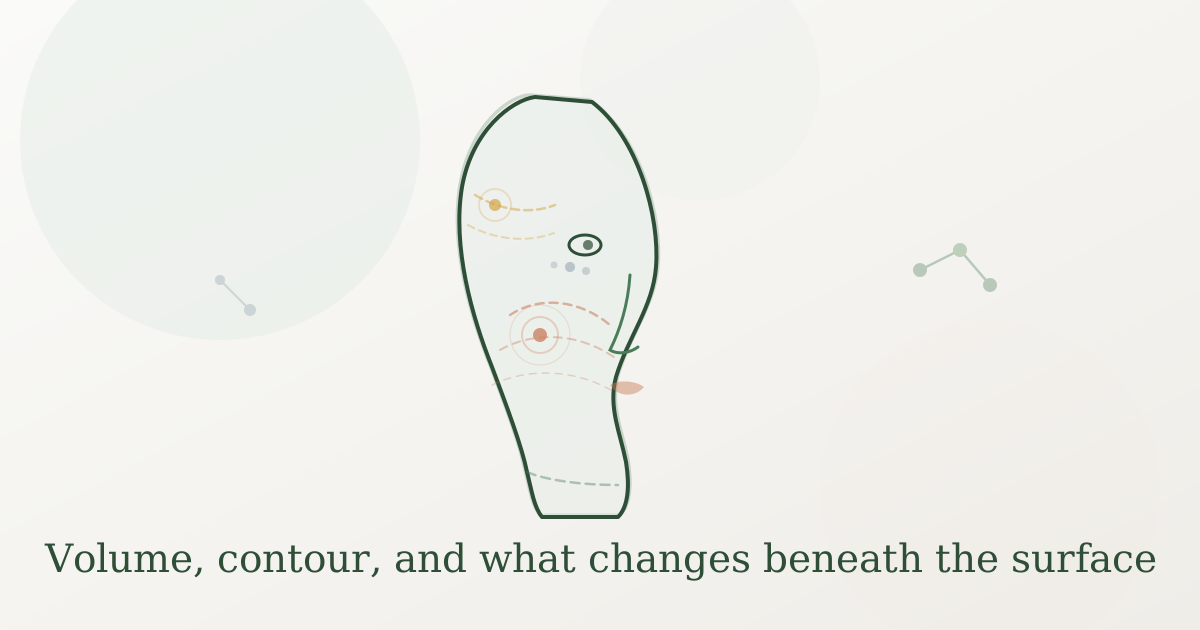
Losing weight quickly — whether through a low-calorie diet, a GLP-1 medication like semaglutide, or bariatric surgery — can do more than change how your clothes fit. Many people notice their face looks noticeably different, sometimes before the rest of their body catches up. Understanding why that happens can help you set realistic expectations and make informed decisions alongside your care team.
What Actually Changes in Your Face
Your face contains several distinct fat compartments — small pockets of fat that sit beneath the skin in the cheeks, temples, around the eyes, and along the jawline. These compartments help create the rounded, "lifted" appearance most people associate with a youthful face.
During rapid weight loss, the body draws on fat stores throughout the body, including these facial compartments. The result can be:
- Hollowing in the cheeks or temples — a sunken or "gaunt" appearance
- More visible nasolabial folds — the lines running from nose to mouth become more prominent
- Looser skin under the chin or along the jaw — often called jowling
- More visible under-eye hollows — sometimes described as looking tired
The speed of loss matters. Gradual loss gives skin more time to slowly contract; rapid loss often outpaces the skin's ability to adapt.
Why Skin Doesn't Always "Snap Back"
Skin elasticity depends on collagen and elastin fibers in the dermis. These proteins keep skin firm and resilient when young, but their production naturally slows with age. When fat volume beneath the skin decreases quickly, older or sun-damaged skin may not have the structural proteins needed to rebound. The result is laxity — skin that appears loose or crepey rather than taut.
Factors that influence how much laxity develops include age at the time of loss, total amount of weight lost, sun exposure history, smoking history, hydration, and genetics. No single factor predicts the outcome, which is why individual results vary so widely.
Putting It in Context
Facial changes after weight loss are a normal physiological response — not a sign that something has gone wrong. For most people working toward a healthier weight, the cardiovascular and metabolic benefits of fat loss far outweigh cosmetic concerns. Dermatologists and plastic surgeons can discuss options for skin laxity if it becomes a significant concern after weight has stabilized.
If you're weighing the potential benefits and trade-offs of a medically supervised weight-loss plan, See where your numbers stand → to explore whether you may be eligible for structured support.
This article is for educational purposes only and is not medical advice. Please consult a licensed healthcare provider for guidance specific to your situation.