You’ve probably seen the letters BMI on a doctor’s form or a health app. It sounds technical, but the idea is simple. Here’s what your number actually means — in everyday language.
BMI in one sentence
BMI (Body Mass Index) is a quick way to compare your weight to your height. That’s it. It gives one number that helps place you in a general range, so you and a provider have a starting point for a conversation.
The ranges, simply
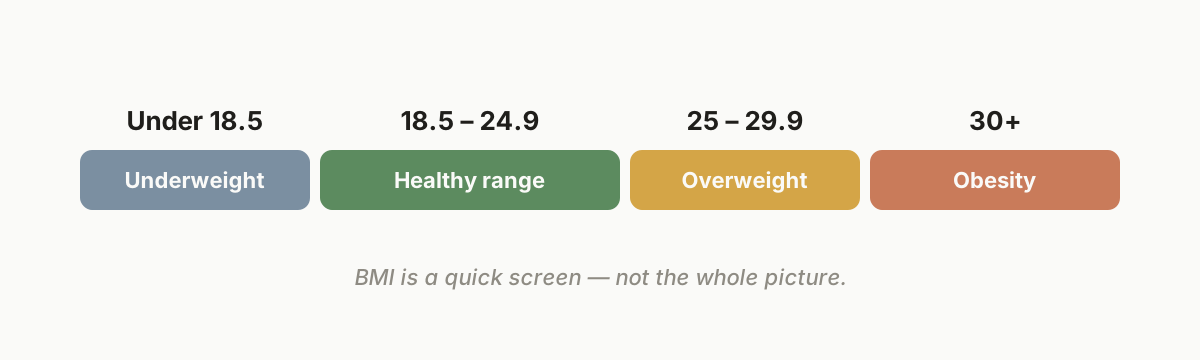
- Under 18.5 — underweight
- 18.5 to 24.9 — healthy range
- 25 to 29.9 — overweight
- 30 and above — obesity
These bands are the same ones licensed providers use when they consider things like weight-loss medication eligibility.
What BMI does not tell you
BMI is useful, but it has blind spots. It can’t tell:
- the difference between muscle and fat (muscle is heavier, so athletes can read "high");
- where your body stores fat (belly fat carries more health risk than hip fat);
- your sleep, blood sugar, blood pressure, or fitness — all of which matter.
So think of BMI as the front door, not the whole house.
Two cousins: BMR and TDEE
While you’re here, two related numbers are worth knowing:
- BMR is the energy your body burns just to keep you alive at rest.
- TDEE is your total daily burn once you add movement.
Together they explain how many calories you actually use in a day — handy if you’re planning changes.
See your own numbers
The fastest way to get all of this for yourself is a free, 30-second check that calculates your BMI, BMR, TDEE, and a body-fat estimate.
Curious what happens if your number lands on the higher end? Our guide to GLP-1 medications explains the options in plain English. This article is educational only and isn’t medical advice.