GLP-1 receptor agonists — medications like semaglutide (Wegovy, Ozempic) and tirzepatide (Zepbound) — have changed how clinicians approach obesity management. But a common question follows: what actually happens when you stop taking them?
What the Research Shows
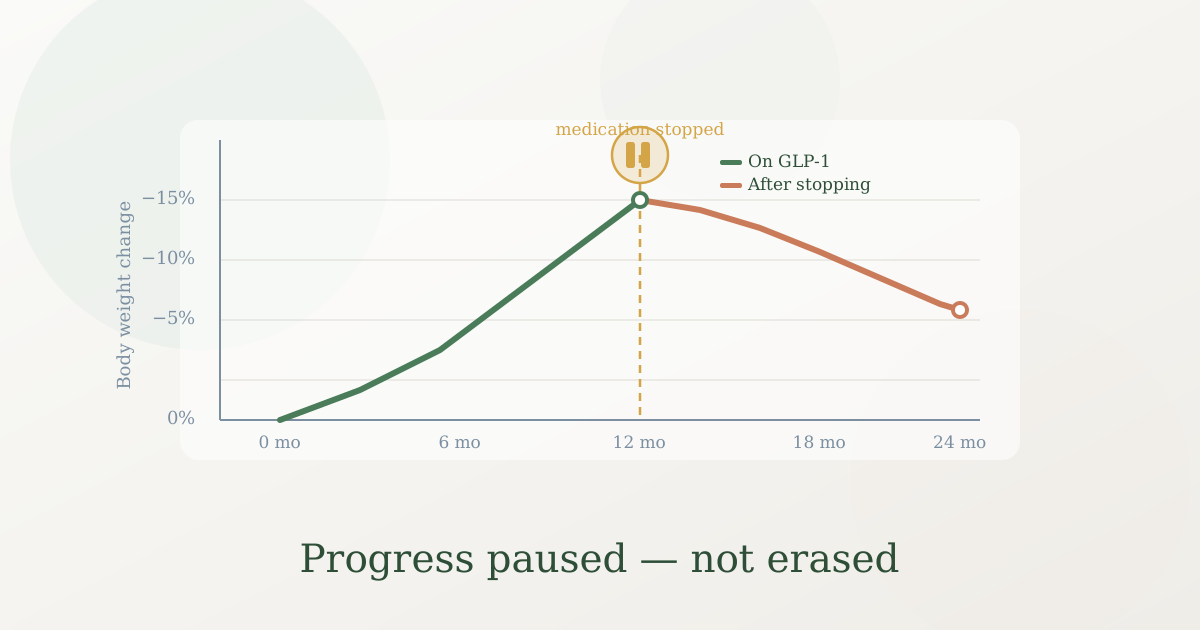
Clinical trials offer a consistent picture. When participants discontinued GLP-1 therapy, a significant portion of the weight lost during treatment returned within 12–18 months. A landmark extension of the STEP 1 trial found that roughly two-thirds of lost weight was regained one year after stopping semaglutide, while participants who continued the medication maintained their results.
This pattern reflects the underlying biology. Obesity is a chronic, relapsing condition driven partly by hormonal signals that regulate hunger and energy storage. GLP-1 medications work with those signals; stopping them lets older patterns reassert themselves.
Why This Matters for Planning
Understanding the discontinuation effect can help people set realistic expectations before they ever start treatment. Key points worth knowing:
- Appetite often returns within weeks of stopping, sometimes feeling stronger than before.
- Metabolic improvements — such as better blood sugar regulation — may also diminish over time.
- Duration of therapy is a clinical decision, not a one-size answer. Some people take GLP-1 medications long-term; others use them as a bridge alongside lifestyle work.
See where your numbers stand →
What Happens Next Isn't Fixed
Discontinuation doesn't automatically mean all progress is lost. Behavioral habits built during treatment — different eating patterns, more movement, better sleep — can persist independently. Working closely with a licensed provider before, during, and after any medication phase gives you the best foundation for maintaining health gains.
Any decision about starting, continuing, or stopping a GLP-1 medication should be made with a licensed healthcare provider who knows your full medical history.
This post is for educational purposes only and is not medical advice; consult a licensed provider for guidance specific to your situation.