Body size can be measured in more ways than one. While BMI remains the most widely used screening tool, researchers have spent decades studying another simple calculation: the waist-to-height ratio (WHtR). Understanding what it is — and what it isn't — can help you have more informed conversations with your care team.
What Is Waist-to-Height Ratio?
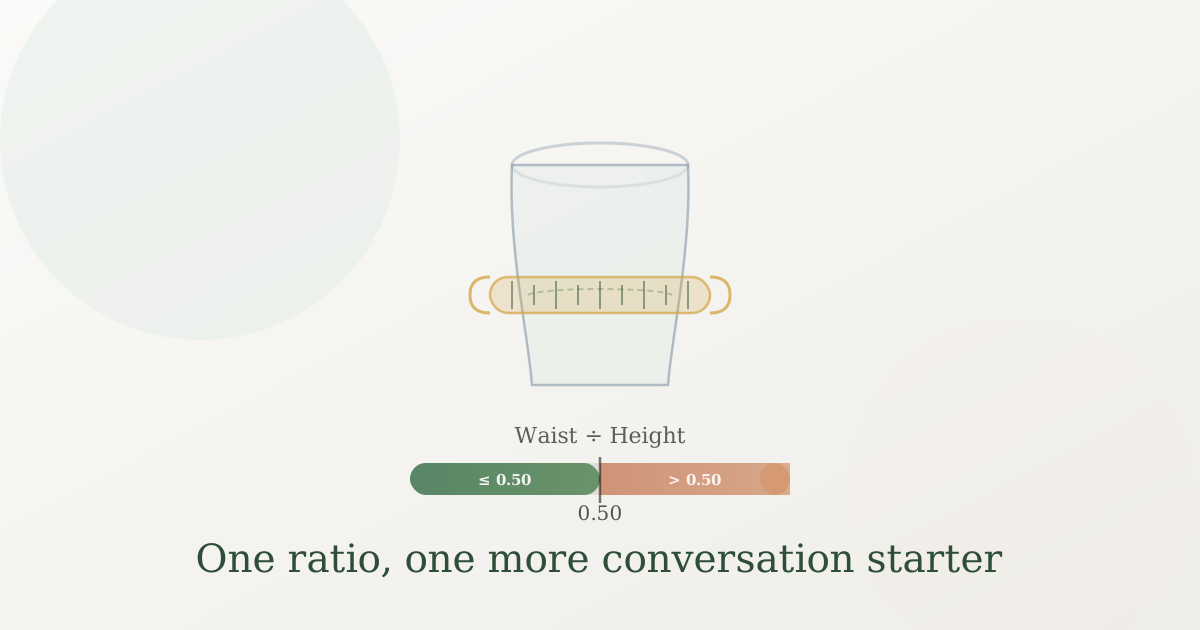
The math is straightforward: divide your waist circumference by your height, both in the same unit (inches or centimeters). A result of 0.50 is often cited in research as a general boundary — meaning a waist no more than half your height. Because it's a ratio, it adjusts naturally for tall and short individuals in a way that waist circumference alone does not.
Why Researchers Pay Attention to It
Abdominal fat stored around internal organs — sometimes called visceral fat — is associated in population studies with metabolic and cardiovascular risk factors. WHtR attempts to capture this regional distribution more directly than BMI, which reflects total body mass relative to height but says nothing about where weight is carried.
- BMI is widely available, requires only a scale and a stadiometer, and is useful at the population level.
- WHtR adds a dimension of fat distribution that BMI misses.
- Neither tool diagnoses disease or replaces a clinical evaluation.
Some public-health researchers argue WHtR may be a stronger predictor of cardiometabolic risk than BMI alone, though scientific consensus continues to evolve.
How to Use This Information
Measure your waist at the level of your navel, relaxed (not sucked in). Divide by your height. That number is one data point — worth noting, worth discussing, but never worth acting on in isolation. A licensed clinician can interpret it alongside blood panels, blood pressure, family history, and other context that no single ratio captures.
See where your numbers stand →
This article is for general education only and is not medical advice; consult a licensed healthcare provider for personalized guidance.